
The start of a new year always brings a particular kind of optimism.
Not the loud, fireworks kind. The quieter kind. The one that shows up as a pause. A reset. A chance to try again.
This year, that feeling arrived alongside a question I’ve been wondering as artificial intelligence reshapes how we live, work, and learn: what must we be careful not to lose?
The answer met me on the water, on holiday, surrounded by family and friends.
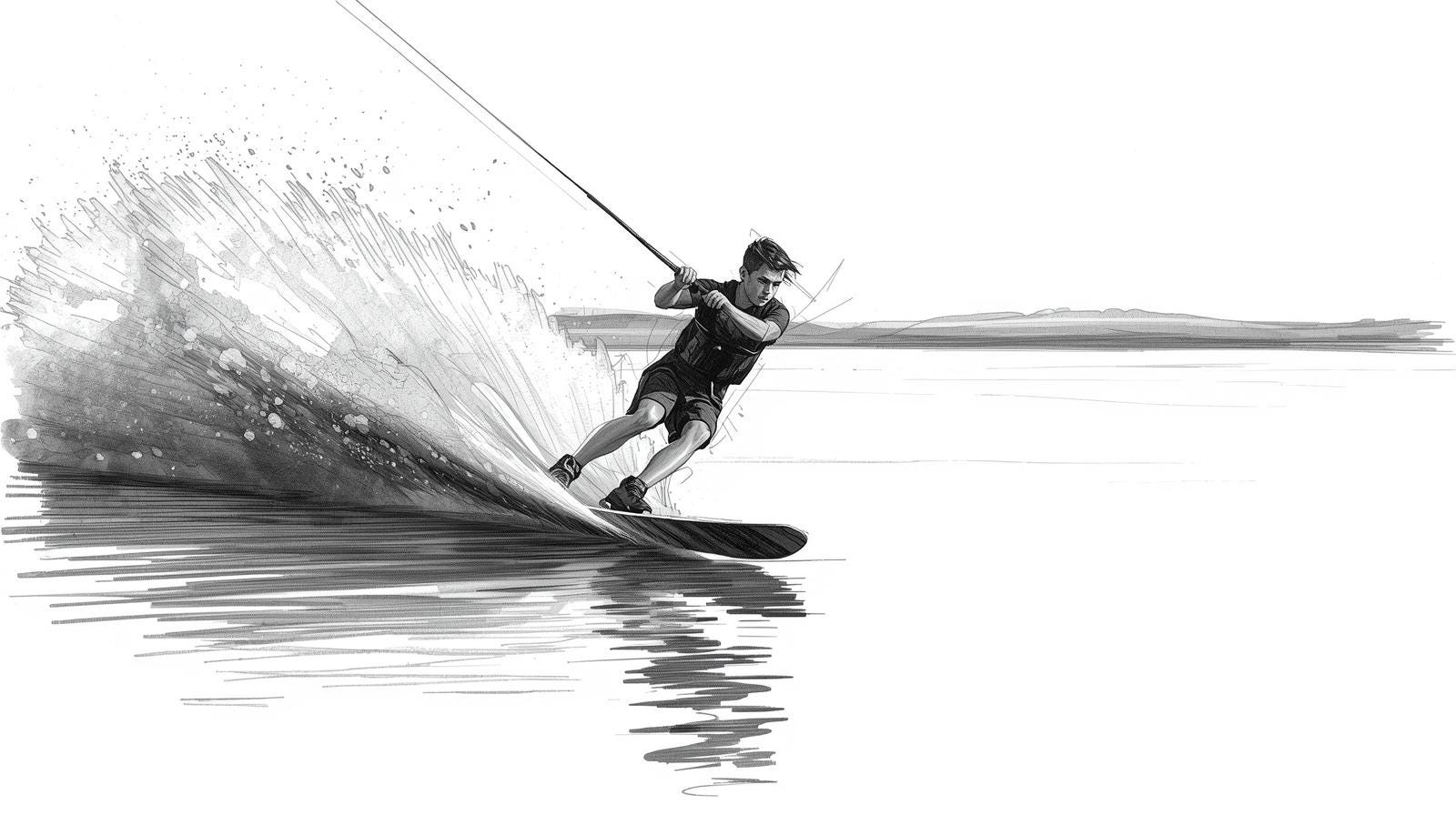
Teaching children and first-time adults how to kneeboard and water ski has a way of stripping learning back to its essentials. There are no worksheets. No rubrics. No algorithms nudging the next step. Just a rope, a body trying to find balance, and that low hum of anticipation before the boat moves.
And once again, I was reminded of the joy of learning when the conditions are right.
When wellbeing comes before performance.
When people are free to act, adjust, and try again.
When feedback clarifies rather than judges.
And when effort leads to a sense of accomplishment that actually means something.
What unfolded over the week was a quiet but powerful illustration of how learning allows people to flourish.
The foundation comes first
Before anyone ever stood up on skis, learning was already happening.
Family and friends watched closely. They asked questions. They hovered at the edge a little longer than expected.
Will it be fast?
What if I fall?
Can I stop if I don’t like it?
Then the practical questions followed.
Tell me again — what are the hand signals if I want to go slower? Faster? Stop?
Will it hurt if I fall?
These weren’t technical questions. They were human ones.
Nothing began until people felt safe enough to begin. Physically, yes. But also emotionally. They needed to know they had choice. That stopping was allowed. That falling wouldn’t be laughed at or rushed past.
At one point, I had to remind my thirteen-year-olds that the rush they were feeling was completely normal. That flicker of nerves. The quickened heartbeat. The surge of adrenaline just before the boat pulls away.
Even after skiing for many years, I still feel it myself. Every single time. The moment I dive into the water for the first run, there’s the same brief pause. The same anticipation. The same reminder that learning, even when familiar, still asks something of us.
As the days unfolded, I could see a subtle shift taking place. Family and friends weren’t just learning a new skill; they were beginning to think like skiers and kneeboarders. They grew calmer. More regulated. More willing to notice what was happening and adjust. And, crucially, more able to stay engaged even after falling.
That foundation mattered more than anything else. Without it, nothing that followed would have stuck.
Choosing to act
Before the slack tightened, there was always a moment.
A look back at the boat.
A nod.
A small hand signal.
I’m ready.
Confidence didn’t come first.
Choice did.
Standing up on skis isn’t about believing you’ll succeed immediately. It’s about deciding to try without knowing how it will go. Learning begins there, not when outcomes are guaranteed, but when people feel able to act anyway.
That moment is where belief starts to form.
Albert Bandura described self-efficacy as the belief that “I can do something about this.” Not abstract confidence, but confidence grounded in action. On the water, all four of his sources were visible.
Small mastery experiences — staying up just a little longer than before.
Vicarious experiences — watching someone else wobble, fall, recover, and try again.
Calm verbal encouragement — steady, credible, never exaggerated.
And emotional regulation — learning that nerves and adrenaline don’t signal danger, but engagement.
Belief didn’t arrive all at once. It accumulated quietly, through experience that made sense.
Learning as adjustment, not just achievement
We never rushed to one ski.
We started on the kneeboard, low and stable, close to the water. Then two skis, where balance suddenly mattered more and wobbles became part of the deal. Only later, when bodies had learned something about timing and tension, did one ski even become an option.
Not because it was the goal.
But because it was the next thing that made sense.
Every attempt taught something. Every fall carried information. Each run looked a little different from the one before.
Learning didn’t move in a straight line. It looped. It adjusted. It responded to conditions.
As the process unfolded, I could see people becoming adaptive problem-solvers, calm enough to notice, regulated enough to adjust, and secure enough to stay engaged after falling.
That’s what real learning looks like. Not neat. Not linear. But alive.
How confidence actually grew
What struck me most was how confidence developed.
Not through hype.
Not through praise for its own sake.
And not simply because someone said, you’ve got this.
Confidence grew because effort kept leading somewhere.
Someone stayed up half a second longer. Someone softened their knees at just the right moment. Someone fell hard, climbed back into the boat, and asked to go again.
Encouragement mattered, but only because it was calm and credible. Fear softened as familiarity grew. Bodies relaxed as the unknown became known.
Belief didn’t arrive suddenly. It built slowly, through experiences that linked effort to outcome.
Making sense of what happened
After each run, family and friends didn’t just want applause.
They wanted understanding.
Why did that one feel steadier?
What changed that time?
Was it my arms or my knees?
Feedback worked because it helped people make sense of their experience. It turned movement into insight. It gave them something concrete to try next.
That’s when learning deepens, when experience becomes information, not judgement.
The feeling at the end
There was a moment I kept noticing as each skier and kneeboarder climbed back into the boat.
They were exhausted. Arms aching. Legs shaking. Faces flushed.
And yet they were glowing.
Smiling. Laughing. Replaying the moment they stood up, or stayed up longer than before. Physically spent, but emotionally elated. Beaming with a quiet sense of pride.
There’s something deeply human about that feeling. When effort leads to understanding, the brain rewards us. Not with ease, but with satisfaction. That mix of fatigue and joy is learning doing exactly what it evolved to do.
Easy success rarely motivates us for long. Earned progress does.
What stayed with me
Looking back, all the dimensions of flourishing were there on the water, lived out by my family and friends.
Happiness — but not the shallow kind.
The happiness that comes from believing in yourself at the very moment you doubted yourself most, and then doing it anyway. I saw it written all over their faces as they climbed back into the boat. Not a loud celebration. Quiet pride. The kind that settles in slowly and stays.
Relationships, built through trust and care.
Through the way we watched out for one another. Through encouragement that was steady and genuine. Through shared laughter after falling, and shared silence before trying again.
Meaning, rooted in doing something real.
This wasn’t learning for display or performance. It mattered in the moment. It asked something of the body, the mind, and the will. And because it was real, it stayed.
Accomplishment, earned rather than given.
Not perfection. Not mastery. Just the honest satisfaction of staying up a little longer than before. Of adjusting. Of persisting. Of knowing that effort led somewhere.
As we look ahead, especially in an AI-rich world, moments like this help us hold our priorities steady. They anchor us to what cannot be automated: the human capacity to persist, to adapt, and to find meaning through effort.
So, in the end, it wasn’t all just about skiing.
It was about what happens when people feel safe enough to try, supported enough to adjust, and brave enough to keep going.
It was about people, learning together, supporting one another, and sustaining the connections that allow learning and living to flourish.